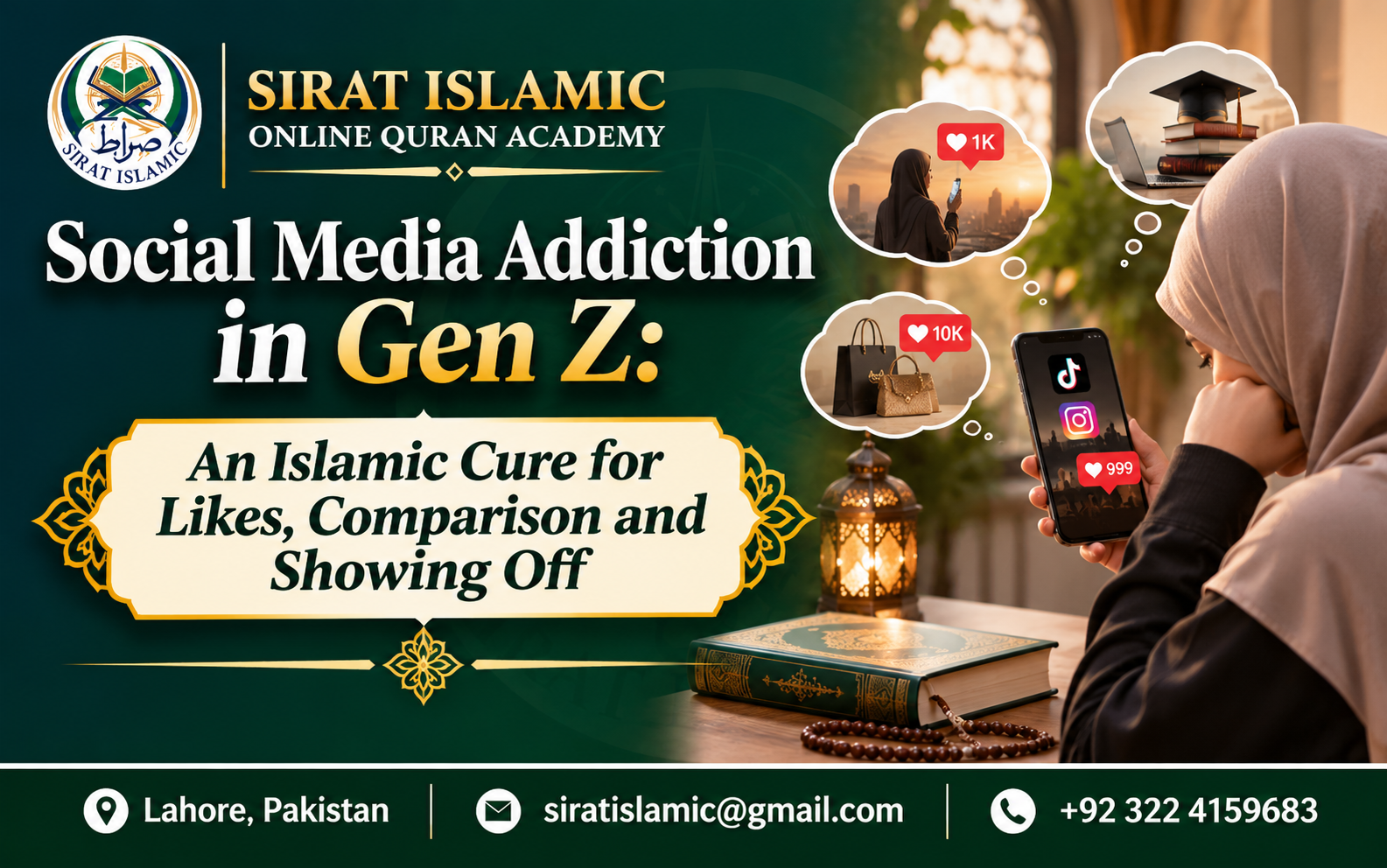
Social Media Addiction in Gen Z: An Islamic Cure for Likes, Comparison and Showing Off
A girl takes a photo with great care, adds a filter, thinks of a caption and posts it. Then she checks her phone every two minutes to count the likes. By evening the likes are fewer than she hoped, her mood sinks, and she feels she is not as good as her friends. It looks like a small thing, but a deep illness hides inside it: handing the judgement of your own worth to other people's fingertips.
In the previous article of this series we looked at brain rot and doomscrolling, and how they waste time. This article looks at another side of social media addiction: what it does to our hearts, intentions and relationships.
The Hunger for Likes: Selling Your Self Worth
Social media has turned human value into a number: likes, followers and views. When a young person's happiness rises and falls with that number, they have handed their self worth over to other people's approval. Psychologists call it the need for external validation.
Islam changes the measure of human worth completely: إِنَّ أَكْرَمَكُمْ عِندَ اللَّهِ أَتْقَاكُمْ "The most honoured of you in the sight of Allah is the most mindful of Him." (Al Hujurat 49:13) The Prophet صَلَّى اللهُ عَلَيْهِ وَعَلَى آلِهِ وَسَلَّمَ said: «إِنَّ اللَّهَ لَا يَنْظُرُ إِلَى صُوَرِكُمْ وَأَمْوَالِكُمْ، وَلَكِنْ يَنْظُرُ إِلَى قُلُوبِكُمْ وَأَعْمَالِكُمْ» "Allah does not look at your appearance or your wealth. He looks at your hearts and your deeds." (Muslim 2564)
A young person who truly believes that their real value lies with Allah cannot be lifted up or knocked down by the likes on a post. That is a freedom the slave of the screen never tastes.
The Poison of Comparison
On Instagram and TikTok, people show only their best moments: trips, expensive clothes, achievements and happiness. The viewer compares their whole life with other people's highlights, and their own life always looks smaller. This also creates the fear of being left out, known as FOMO (fear of missing out).
The Quran puts its finger on the root of this illness:
وَلَا تَمُدَّنَّ عَيْنَيْكَ إِلَىٰ مَا مَتَّعْنَا بِهِ أَزْوَاجًا مِّنْهُمْ زَهْرَةَ الْحَيَاةِ الدُّنْيَا لِنَفْتِنَهُمْ فِيهِ ۚ وَرِزْقُ رَبِّكَ خَيْرٌ وَأَبْقَىٰ
"Do not stretch your eyes towards the enjoyments We have given some of them, the glitter of worldly life, by which We test them. The provision of your Lord is better and more lasting." (Ta Ha 20:131)
The Prophet صَلَّى اللهُ عَلَيْهِ وَعَلَى آلِهِ وَسَلَّمَ gave a simple recipe for gratitude: «انْظُرُوا إِلَى مَنْ أَسْفَلَ مِنْكُمْ، وَلَا تَنْظُرُوا إِلَى مَنْ هُوَ فَوْقَكُمْ، فَهُوَ أَجْدَرُ أَنْ لَا تَزْدَرُوا نِعْمَةَ اللَّهِ عَلَيْكُمْ» "Look at those below you, not at those above you. That is more likely to keep you from looking down on Allah's blessings upon you." (Muslim 2963)
The algorithm always shows us the people "above" us. Living by this hadith means consciously turning our gaze the other way and choosing gratitude over longing every time.
Showing Off: The Quiet Thief of Intention
The most dangerous effect of social media is that it slips showing off even into worship. The umrah selfie, the charity video, the tahajjud story: each may have a good purpose, but one question should always stay in the heart: am I doing this for Allah or for people?
The Prophet صَلَّى اللهُ عَلَيْهِ وَعَلَى آلِهِ وَسَلَّمَ built the religion on intention: «إِنَّمَا الْأَعْمَالُ بِالنِّيَّاتِ» "Actions are judged by intentions." (Bukhari 1) The Quran warns of ruin for those who pray but الَّذِينَ هُمْ يُرَاءُونَ, "who only show off." (Al Ma'un 107:6)
This does not mean every good deed must be hidden. Mentioning good deeds to encourage others is allowed. The real test is the state of the heart: if no likes come, does your good deed suddenly feel worthless? If so, your intention needs repair.
Envy, Backbiting and Fake News
Social media has given old sins new speed:
Envy. Feeling a burn inside when you see other people's joy. The Prophet صَلَّى اللهُ عَلَيْهِ وَعَلَى آلِهِ وَسَلَّمَ said: «إِيَّاكُمْ وَالْحَسَدَ، فَإِنَّ الْحَسَدَ يَأْكُلُ الْحَسَنَاتِ كَمَا تَأْكُلُ النَّارُ الْحَطَبَ» "Beware of envy, for envy eats up good deeds as fire eats up wood." (Abu Dawud 4903)
Backbiting and mockery. Mocking people in comments, humiliating them through memes and speaking ill behind their backs. The Quran compares backbiting to eating the flesh of your dead brother (Al Hujurat 49:12). Every word typed behind a screen is also written in our record.
Fake news. Forwarding a story without checking it. The Quran's command is clear:
يَا أَيُّهَا الَّذِينَ آمَنُوا إِن جَاءَكُمْ فَاسِقٌ بِنَبَإٍ فَتَبَيَّنُوا أَن تُصِيبُوا قَوْمًا بِجَهَالَةٍ فَتُصْبِحُوا عَلَىٰ مَا فَعَلْتُمْ نَادِمِينَ
"O you who believe, if a wrongdoer brings you news, verify it, lest you harm people out of ignorance and then regret what you have done." (Al Hujurat 49:6)
One "forward" button can destroy someone's honour, break a family and spread chaos in society.
Three Questions Before You Post
A simple rule for social media is this hadith: «مَنْ كَانَ يُؤْمِنُ بِاللَّهِ وَالْيَوْمِ الْآخِرِ فَلْيَقُلْ خَيْرًا أَوْ لِيَصْمُتْ» "Whoever believes in Allah and the Last Day should speak good or stay silent." (Bukhari 6018) Before every post, comment or share, ask: 1. Is it true? If you have not checked, do not pass it on. 2. Is it good? If it humiliates someone, is indecent or pointless, stop. 3. Who is it for? If the intention is only people's praise, fix your intention.
Make Social Media a Means of Good
Social media is not evil in itself. It is a powerful tool that can spread evil or good. One good post from a young person can bring someone back to prayer, ease someone's worry or connect someone to the Quran. The Prophet صَلَّى اللهُ عَلَيْهِ وَعَلَى آلِهِ وَسَلَّمَ said: «مَنْ دَلَّ عَلَى خَيْرٍ فَلَهُ مِثْلُ أَجْرِ فَاعِلِهِ» "Whoever guides to good gets a reward like the one who does it." (Muslim 1893) Your account can become an ongoing charity or an ongoing sin, and the choice is yours.
Practical Steps
- Change your measure of worth. Use the setting that hides like counts so the number does not rule your mood.
- Distance yourself from accounts that trigger envy. Mute or unfollow anyone who makes your own life feel small.
- Build a habit of gratitude. Write down or recall three blessings every day.
- Keep some worship private. Have some good deeds that no one but Allah knows about.
- Never share without checking, especially religious narrations and political news.
- Give time to real relationships. Sitting face to face with parents, siblings and friends brings more peace than any online connection.
A Final Word
Social media is a mirror that shows us other people's lives but often makes us forget our own true face. Real success for Gen Z is not how many followers they have, but whom they follow. A young person who looks for their worth with Allah can live in the world of likes without becoming its slave.
References
- Quran, Al Hujurat 49:13.
- Muslim, Sahih, Kitab al Birr wa al Silah, hadith 2564.
- Quran, Ta Ha 20:131.
- Muslim, Sahih, Kitab al Zuhd wa al Raqa'iq, hadith 2963.
- Al Bukhari, Sahih, Kitab Bad' al Wahy, hadith 1.
- Quran, Al Ma'un 107:4 to 6.
- Abu Dawud, Sunan, Kitab al Adab, hadith 4903.
- Quran, Al Hujurat 49:12.
- Quran, Al Hujurat 49:6.
- Al Bukhari, Sahih, Kitab al Adab, hadith 6018.
- Muslim, Sahih, Kitab al Imarah, hadith 1893.